
What Are Soft Shackles and Why Should I Use Them? Here's What Watching a Steel Shackle Fail Taught Me.
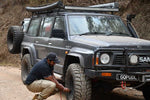

I need to start with a moment I still think about every time I clip a shackle into a recovery point.
We were doing a group recovery on a remote bush track - a straightforward snatch to pull a mate's Patrol out of a creek crossing it had slid sideways into. Nothing dramatic. Standard setup, standard gear. The steel bow shackle connecting the snatch strap to the recovery point let go under load.
I didn't see it in slow motion. It was just gone - a crack, a blur, and then a dent in the side of the assisting vehicle's door that hadn't been there a second before. Nobody was hit. The shackle landed in scrub instead of finding a person. But the gap between "nobody got hurt" and "somebody got seriously hurt" was entirely luck, not planning. The geometry of where people were standing that afternoon happened to be on the right side of the equation. It easily might not have been.
That was the last day I ran steel shackles on a snatch or winching recovery. I switched to soft shackles the following week, and I haven't looked back in years.
If you've landed on this post without knowing much about soft shackles, that story is the reason they exist. Let me explain what they are, what they do better than steel, and which ones I'd put in your kit.
What Exactly Is a Soft Shackle?
A soft shackle is a shackle made from synthetic rope - specifically UHMWPE (Ultra-High-Molecular-Weight Polyethylene), a material more commonly known by the brand name Dyneema. It performs the same connection function as a traditional steel bow shackle: it links one piece of recovery equipment to another - a snatch strap to a recovery point, a winch extension to a tree trunk protector, a kinetic rope to a rated hook.
The difference is everything about how it does that job.
A steel bow shackle is a rigid, forged metal component with a threaded pin. A soft shackle is a continuous loop of braided synthetic rope, secured with a button knot. You thread the loop through your recovery point, pass the knot through the loop, and it locks under load. To undo it, you release the knot and the loop opens - no threading, no tools, no fumbling with a steel pin caked in mud.
That's the simple version. The details are where it gets genuinely interesting.
Argument 1: Safety - What Actually Happens When a Shackle Fails Under Load
This is the argument that matters most, so I want you to understand the physics properly.
When a steel bow shackle fails under recovery load, it doesn't just go slack. It stores the energy of that load - everything your winch or kinetic rope has put into it - and releases it instantaneously when the steel fractures. That energy has to go somewhere. A forged steel shackle weighing 300–500g moving at speed is a projectile with serious injurious - and potentially lethal - force. It doesn't matter that it's small. Kinetic energy at those velocities is enough to cause catastrophic injury.
This isn't hypothetical. Steel shackle failures are the most common cause of serious injury in 4WD recoveries. I've seen the aftermath. The dented door on that Patrol was a steel shackle getting lucky. What it can do to a person standing in the wrong spot is not something I'll describe in detail here, but it's the reason professional recovery courses spend so much time on exclusion zones.
When a soft shackle fails under load, it doesn't become a projectile. The UHMWPE fibres separate and the rope falls. There's no stored energy in a rigid body - the material itself absorbs the failure. People standing in the wrong spot walk away.
This is not a minor improvement in risk profile. It is a fundamental change in the failure mode of one of the most common connection points in off-road recovery.
Argument 2: Performance - They're Stronger Than Steel at the Same Weight
This is the one that surprises most people who haven't looked into it.
UHMWPE rope has one of the highest strength-to-weight ratios of any man-made material. Pound for pound, it outperforms steel. In practical terms, this means a soft shackle can achieve breaking strengths that a steel shackle of similar weight - and significantly smaller packed size - cannot match.
The MAD GEAR Primo Shackle from recoverygear.com.au has a 14-tonne breaking strength and is rated suitable for vehicles up to 5 tonnes. It's engineered to float in water - genuinely useful on creek crossings and beach recoveries where a dropped steel shackle disappears into water or sand.
The MAD GEAR Supremo Shackle steps that up to a 20-tonne breaking strength, again rated for vehicles up to 5 tonnes. The Supremo is the one I'd reach for on heavy touring rigs with big GVMs - loaded 200 Series, full-build Patrols, heavily accessorised Prados - where the forces in a serious recovery are at the upper end of what a single connection point needs to handle.
Both MAD GEAR shackles are designed and manufactured specifically for Australian off-road recovery conditions, and both are rated to a standard that exceeds the working load of virtually any snatch strap or kinetic rope you'll connect them to. That last point matters: the weakest link in a recovery system shouldn't be the connection point.
For a different design approach, the Carbon Offroad Monkey Fist Soft Shackle uses 10mm UHMWPE rope in two ratings - 13 tonnes and 15 tonnes minimum breaking strain - with a super heavy duty braided tight sheath over the core. That outer sheath is the design detail worth understanding. Standard soft shackles expose the Dyneema rope directly to the environment. The Carbon Offroad sheath adds a layer of protection against the abrasion and sharp edges that UHMWPE is vulnerable to in the field. The Monkey Fist design also makes it easier to see whether the shackle is correctly set before you load it - a meaningful safety detail that gets overlooked with some other designs.
The performance numbers across all three options are genuinely impressive for their size and weight. A steel bow shackle rated to 4.75 tonnes is a substantial chunk of steel. A soft shackle rated to 14 or 20 tonnes fits in a shirt pocket.
Argument 3: Practicality - The Everyday Wins That Make a Real Difference
Safety and performance arguments win the head. The practicality arguments are what win the hands - the daily usability that makes you reach for a piece of gear without thinking twice.
They're faster to connect and disconnect. There's no threaded pin to manage. You loop the shackle through the recovery point, pass the knot through the loop, and it's done. Under load, the knot tightens and holds. When the recovery is done, the knot releases easily. No more cross-threaded pins at 11pm in the rain with muddy hands.
They don't damage your recovery points or bull bar. Steel shackles left connected to recovery points chip paint, score the steel, and rattle annoyingly on anything other than a perfectly smooth road. Soft shackles are gentle on every surface they contact. They flex where steel digs in.
They work in water. UHMWPE is unaffected by water - it doesn't absorb it, doesn't weaken when wet, and doesn't corrode. The MAD GEAR shackles are specifically designed to float, which means if you drop one at a creek crossing, you're fishing it off the surface rather than searching the bottom. On beach recoveries, a dropped steel shackle disappears into wet sand. A soft shackle sits on top.
They're lighter. This sounds trivial until you're doing multiple recoveries in a day, handling gear in cold or fatigued conditions, or trying to fit more kit into a tight storage setup. Grams don't matter until they do - and across a full recovery kit, switching from steel to soft shackles at every connection point saves meaningful weight.
They pack small. A 20-tonne rated soft shackle takes up less space than a chocolate bar. Four of them take up less space than a single large steel bow shackle. This matters in a properly packed recovery kit where space is always contested.
The Honest Limitation: Why People Get Soft Shackles Wrong
I promised you a straight answer on this, so here it is.
The biggest problem with soft shackles in Australian 4WD culture is that people don't inspect them regularly enough.
This is a genuine safety issue, and it's the counterweight to everything positive I've said above. Soft shackles are not "fit and forget" equipment. UHMWPE rope degrades under UV exposure over time - the fibres weaken without any obvious external sign that they've done so. A soft shackle that looks fine to a casual inspection may have lost meaningful capacity after extended exposure to Australian sun.
Beyond UV, the specific failure modes to inspect for are:
Abrasion and cuts. UHMWPE is highly vulnerable to sharp edges under load. If your shackle has contacted a rough recovery point, a jagged metal edge, or any abrasive surface under tension, inspect the rope carefully for nicks, cuts, or abraded sections. The Carbon Offroad Monkey Fist's braided outer sheath helps protect the core rope from exactly this - but the sheath itself still needs inspection and can conceal damage to the core if the sheath looks intact.
Distortion of the button knot. The knot is the critical point in a soft shackle. After significant loading, inspect whether the knot has deformed, whether the fibres around it look compressed or damaged, and whether it still releases cleanly. A knot that's been heavily loaded repeatedly and shows signs of compression is a shackle approaching the end of its service life.
Discolouration. Significant fading - particularly bleaching - is a sign of UV degradation. If your shackle has gone from its original colour to a washed-out, bleached appearance, it's time to replace it.
My personal rule: Inspect every soft shackle after every recovery. Give each one a visual and tactile check - run it through your fingers looking for rough spots, cuts, or deformation. If you're in doubt, retire it. A new soft shackle is a fraction of the cost of any outcome that comes from using a degraded one.
The MAD GEAR Gear Pouch - available as a bundle with either two Primo or two Supremo shackles - is worth mentioning here. It's a water-resistant pouch designed specifically to store shackles cleanly, whether they're wet, muddy, or dry. Storing soft shackles in a dedicated, clean pouch rather than loose in your gear means they're not getting abraded by other equipment and UV exposure is minimised when not in use. It's a small detail that extends shackle life meaningfully.
Steel Shackles: Are They Finished?
No — and I want to be honest about this, because the answer is genuinely nuanced.
Steel bow shackles still have legitimate uses in off-road recovery, and I still carry them in certain configurations. Specifically, for winching setups where the shackle is under sustained load for extended periods rather than shock-loaded briefly, steel shackles offer reliability under heat that synthetic rope doesn't. Winch drums and synthetic rope setups generate heat under sustained load, and that heat can transfer to connection points. UHMWPE starts to soften at around 80°C - still well above typical recovery temperatures, but worth being aware of in extreme situations.
Steel shackles are also more resistant to damage from sharp metal recovery point edges, which are unfortunately common on budget or aftermarket bull bars and recovery points. If your recovery points have rough, unfinished metal edges, a soft shackle connecting directly to them under heavy load is at greater abrasion risk than a steel shackle.
The practical answer for most setups: run soft shackles at every connection point where a steel shackle would historically have sat in a snatch or kinetic rope recovery - which is the majority of everyday off-road recoveries. Keep a set of quality steel bow shackles in the kit as a backup and for the specific situations where steel is genuinely the better choice.
Building Your Kit: What I'd Actually Put in Your Recovery Bag
For someone building their first serious recovery kit, or upgrading from a setup that's still running steel throughout, here's my honest recommendation on soft shackles from recoverygear.com.au.
For most 4WDs up to 5 tonne GVM: Start with the MAD GEAR Primo Shackle — 14-tonne breaking strength, floats in water, rated to 5T. Carry a minimum of two. Four is better — one at each end of your snatch strap, and spares for when you're rigging a more complex setup.
For heavy touring rigs and maximum margin: The MAD GEAR Supremo Shackle at 20 tonnes gives you the largest safety margin available in a soft shackle at this size. For a loaded 200 Series or Patrol running close to GVM, this is the one.
For the combination of high rating and cut protection: The Carbon Offroad Monkey Fist Soft Shackle at 13 or 15 tonnes with the braided protective sheath. The Monkey Fist is particularly well-suited to recovery setups where the shackle contacts recovery points or hardware that aren't perfectly smooth — the sheath buys you meaningful abrasion protection that bare Dyneema doesn't have.
For storage: The MAD GEAR Gear Pouch bundle — paired with either Primo or Supremo shackles — keeps everything clean, dry, and away from UV and abrasive contact when not in use. This is the detail that extends shackle life from a couple of trips to years of reliable use.
The One Thing I Want You to Take Away
If you're still running steel bow shackles at every connection point in your recovery kit because you always have and it's never been a problem, I'd ask you to sit with my opening story for a moment.
It was never a problem for me either. Until the afternoon it almost was.
Soft shackles are not a niche upgrade for serious off-roaders. They are a better solution to a problem that every 4WD recovery faces - how to safely connect pieces of equipment under enormous dynamic loads, close to people, in conditions that are always less controlled than you'd like.
The safety improvement is real. The performance is real. The practicality is real. The limitation - regular inspection - is manageable with basic discipline.
Switch your connection points. Inspect them regularly. And if you ever feel doubt about the condition of a soft shackle, retire it without hesitation.
The gear is cheap. The situation that comes from using degraded gear is not.